
- Directions
- Bookmark
- Share
- prev
- next
-
That’ll Hold
-
Thought tends to privilege finished forms while forgetting their genesis. We coexist with events, objects, bodies, and other organizations. Yet these outcomes may be nothing more than momentary actualizations: always provisional resolutions of a far more complex subterranean field, composed of intensive dynamics and multiple processes still open to different outcomes.
We see the crystal once it has crystallized, forgetting the physicochemical conditions that made its formation possible. We see the mature organism and forget the embryological dynamics that produced it. We see the reified institution and forget the historical tensions that gave rise to it. We see subjective identity and forget the series of affects, habits, memories, and experiences from which it is composed.
We will call this field a diagram.
The diagram is neither a form nor an image, and therefore cannot easily be understood through a simple notion of representation. It is a set of forces, relations, and tendencies that remain unresolved. A space of potentiality where different configurations compete to come into being. Like a turbulent, confused sea, traversed by vectors, eddies, and unstable equilibria.
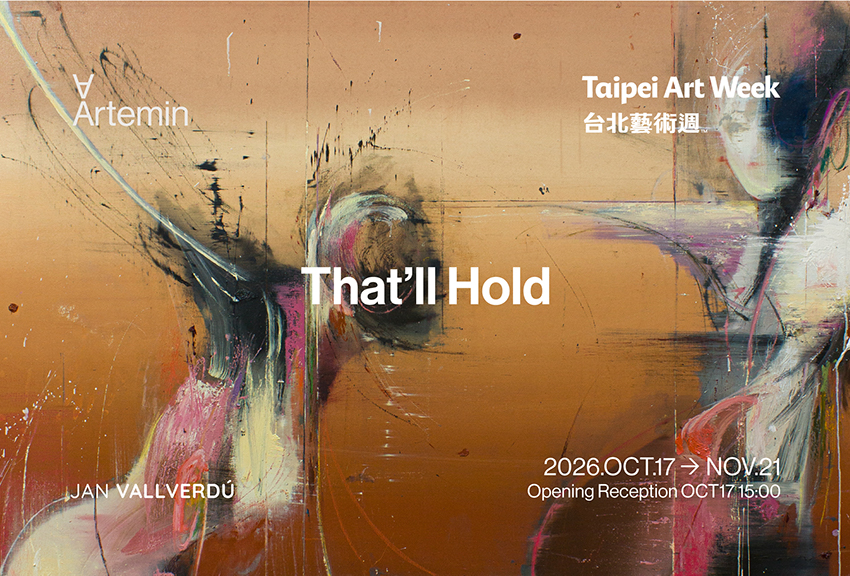
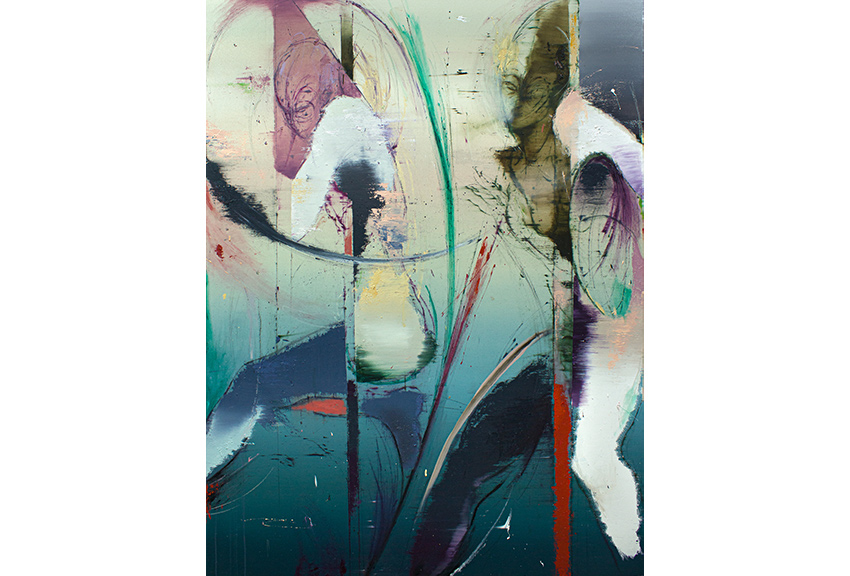
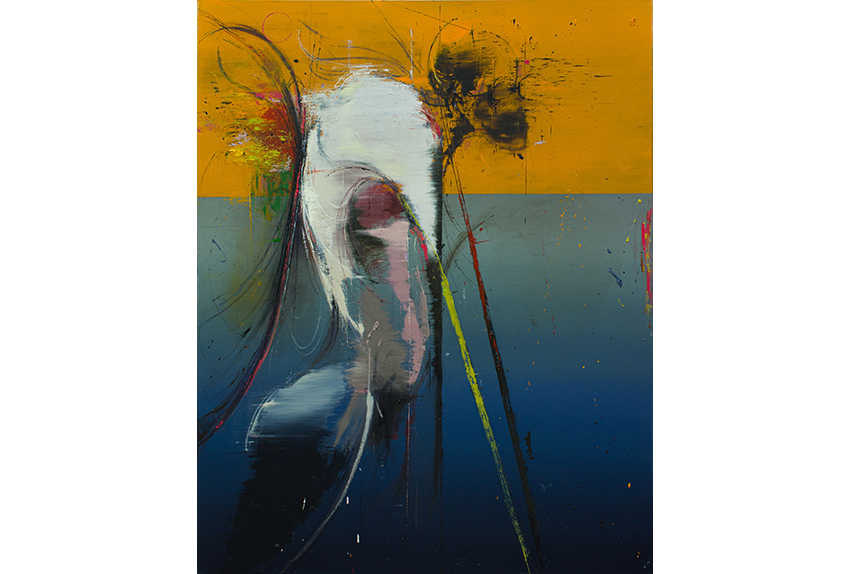
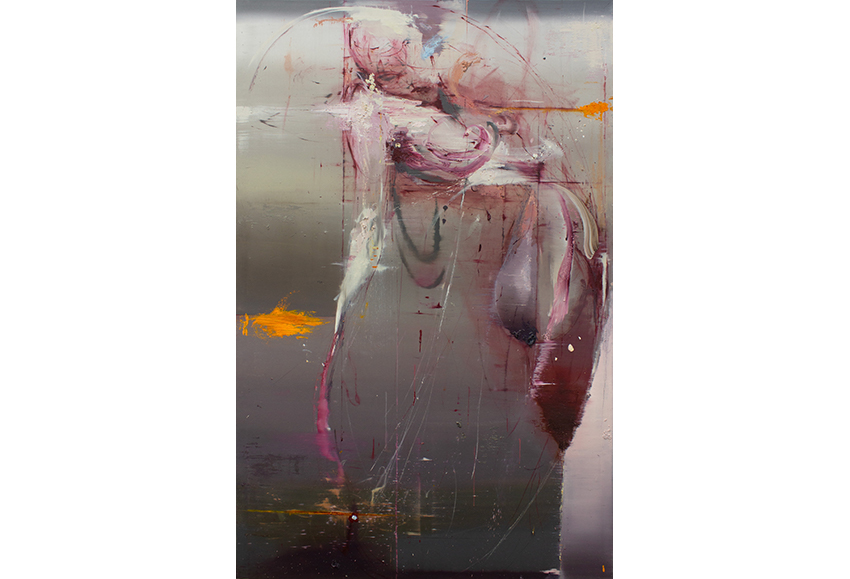
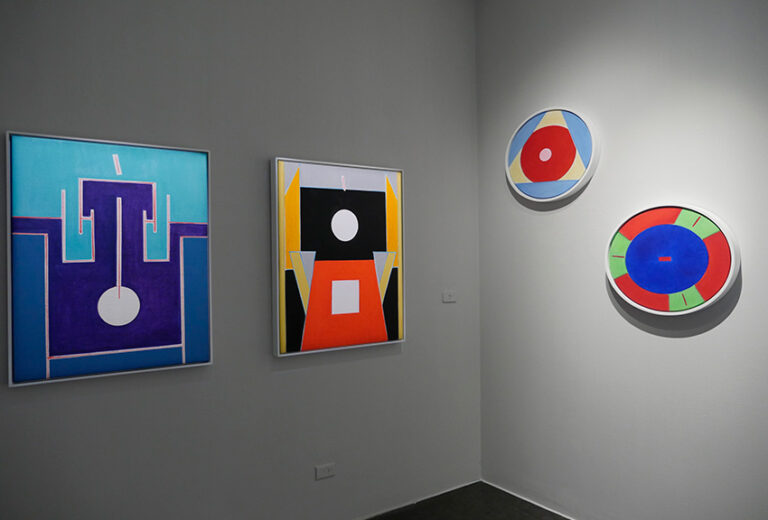
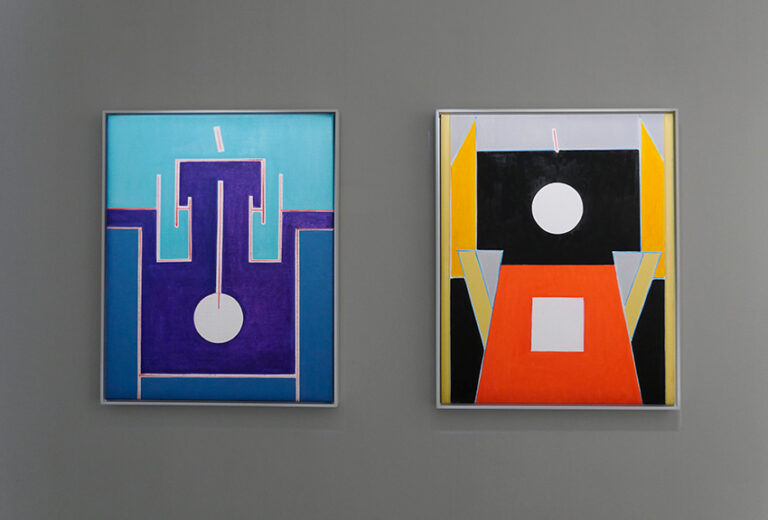
It is precisely within this territory that Jan Vallverdú's painting seems to operate, continuing this diagram.
His works do not simply represent bodies. They depict the moment in which a body manoeuvres. Form persists in a state of stability-in-motion; it exists only insofar as it continues to move, continually improvising. Figures emerge from luminous grounds crossed by chromatic tensions, axes, boundaries, and structures that contain them only provisionally. They are painterly organisms seeking a momentary equilibrium without ever fully settling into fixed form.
There is a certain playfulness—or perhaps cunning—to them. They do not appear to resist the diagram. Rather, instead of searching for a definitive form, they seem to
have learned to negotiate with the forces that traverse them; to drift between them, in a kind of fleeting acceptance.Across these large-format paintings, the pictorial field becomes a space where organization and drift are inseparable. Smooth passages collide with rough ones. A vertical axis functions as a structure of containment, while colour operates as force.
Bars, bands, and vectorial geometries temporarily organize what still retains a background of indeterminacy. Glazes and dragged layers generate depth without resorting to classical perspective. Figures emerge through processes of superimposition and erasure rather than through contour, in a continuous play of appearance and disappearance through light.These works document the temporary stabilization of a diagram. They register an exploration that the artist directs into the interior of painting—one that continues to drift toward new territories.
By: Alex Belli
-
That’ll Hold

- 2026.10.17 - 2026.11.27
- Tue. to Sat. 11:00 - 18:00
- Free Entry
- No. 32, Lane 251, Jihe Road, Shilin District, Taipei City
You May Also Be Interested In

HO Kan Solo Exhibition
- Upcoming|2026.10.17 - 2026.12.13
TAW GALLERIES
Chaozhou Street Art Festival
- Upcoming|2026.10.30
TAW CONNECTIONS | Others

